Explore engaging articles on education technology, practical classroom strategies, and research reflections and field notes, offering fresh insights and professional perspectives on education technology integration.
|Artificial Intelligence, Best Practices, Education Policy, Education Technology, Instructional Technology, IoT, Learning and Development (L&D), Learning Management System, Meme, Mobile Learning, Privacy and Big Data
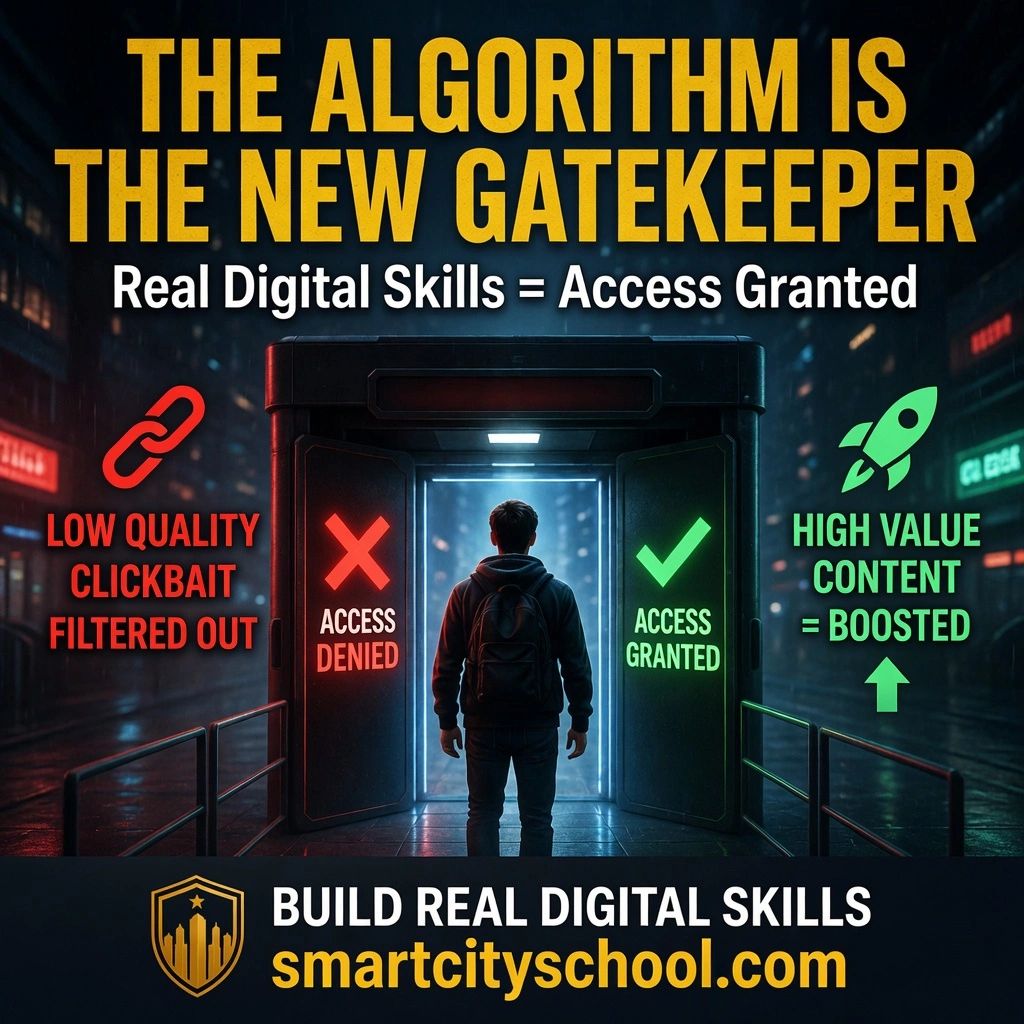
The Algorithm is the New Gatekeeper 🔥
Why Real Digital Skills Are Your Only Way Through. In today's digital world, it's no longer about who you know — it's about what the algorithm knows. Master real digital skills and turn the algorithm from your biggest obstacle into your greatest ally.
|Artificial Intelligence, Best Practices, Distance Education, Education Policy, Education Technology, Instructional Design, Instructional Technology, Learning and Development (L&D), Learning Management System, Meme, Privacy and Big Data, Special education
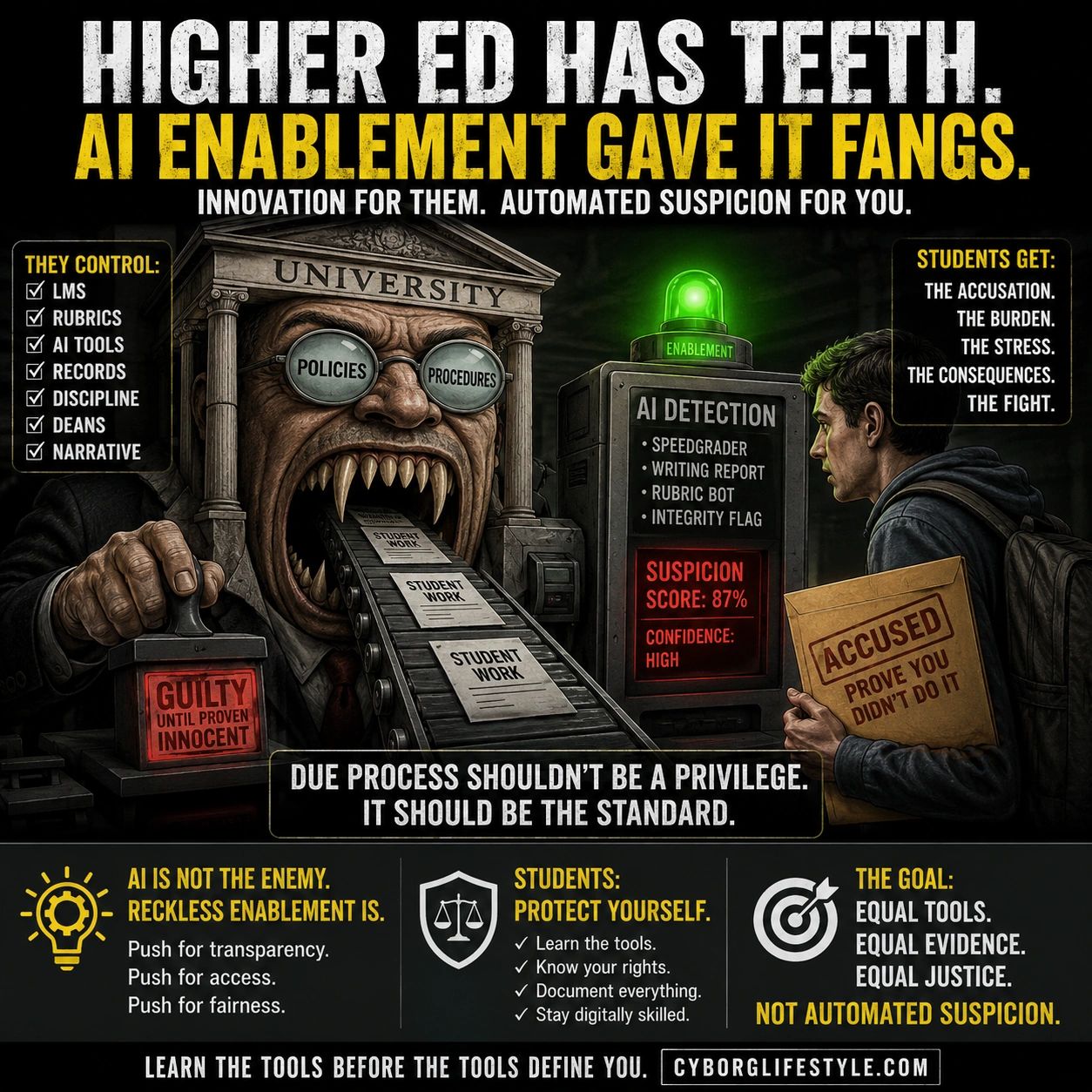
Higher Ed Has Teeth. AI Gave It Fangs
Going to college is no longer enough. In an AI-enabled education system, students need practical digital skills to protect themselves, create opportunities, and understand the tools shaping their future. This info meme explains why AI literacy, data skills, Python, and digital confidence matter whether you choose college, career training, or your own path.
|Best Practices, Business Analysis, Education Policy, Human Resources, Instructional Design, Learning and Development (L&D), Meme
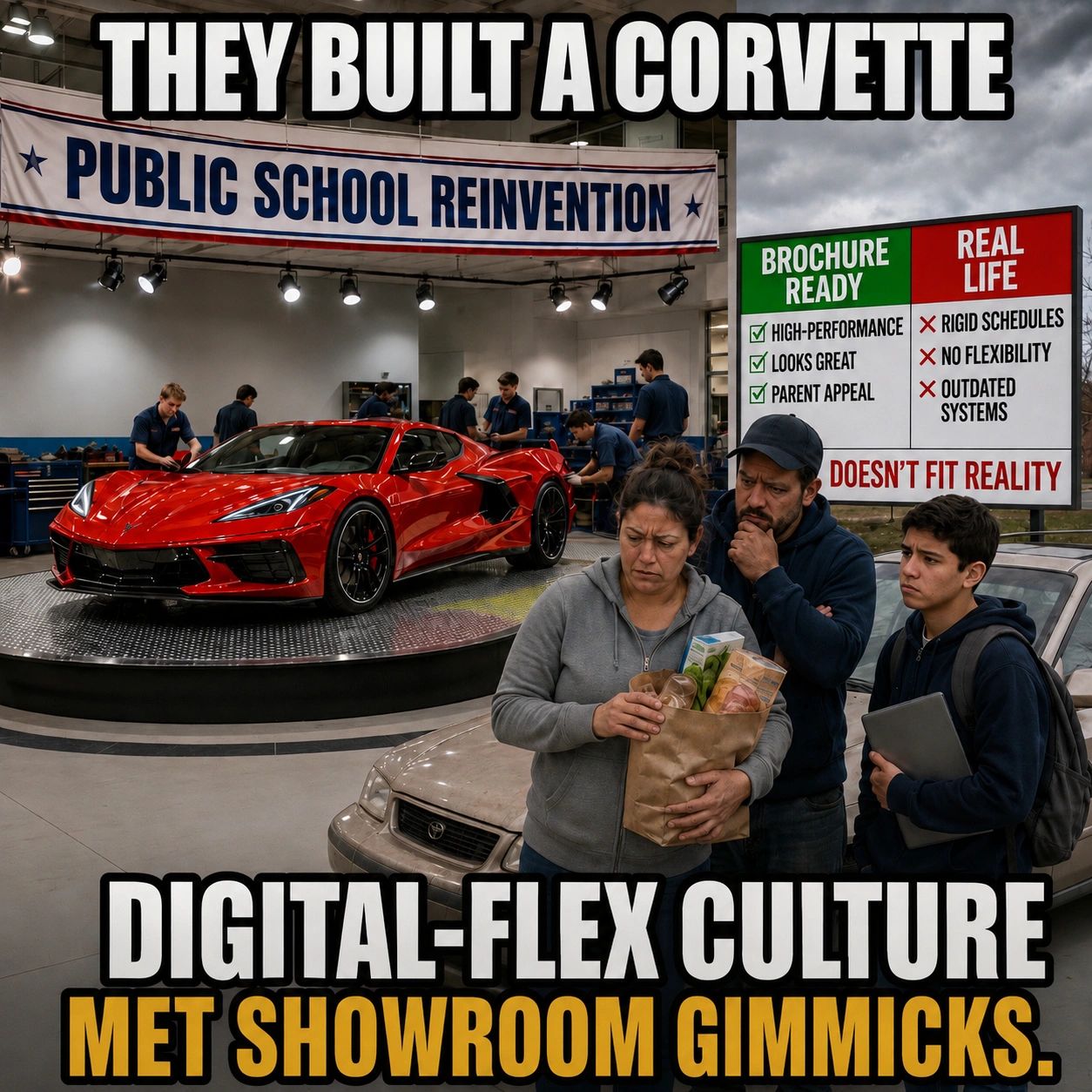
Digital-Flex Culture Meets Public School Showroom Gimmicks
They built a Corvette. Families needed flexibility. That is the tension in education right now. Public schools are trying to reinvent themselves with brochure-ready programs, shiny career pathways, and showroom-style "innovation." But real families are living a different reality. They need flexible schedules, online options, digital skills, hybrid pathways, remote work readiness, practical tools, and real support. The future is not just about putting something impressive on display like some kind of theme park. It is about helping people build the skills to move, work, learn, and adapt in a digital-flex world.
|Artificial Intelligence, Augmented Reality, VR, Business Analysis, Distance Education, Education Policy, Education Technology, Instructional Design, Instructional Technology, Learning and Development (L&D), Learning Management System, Meme
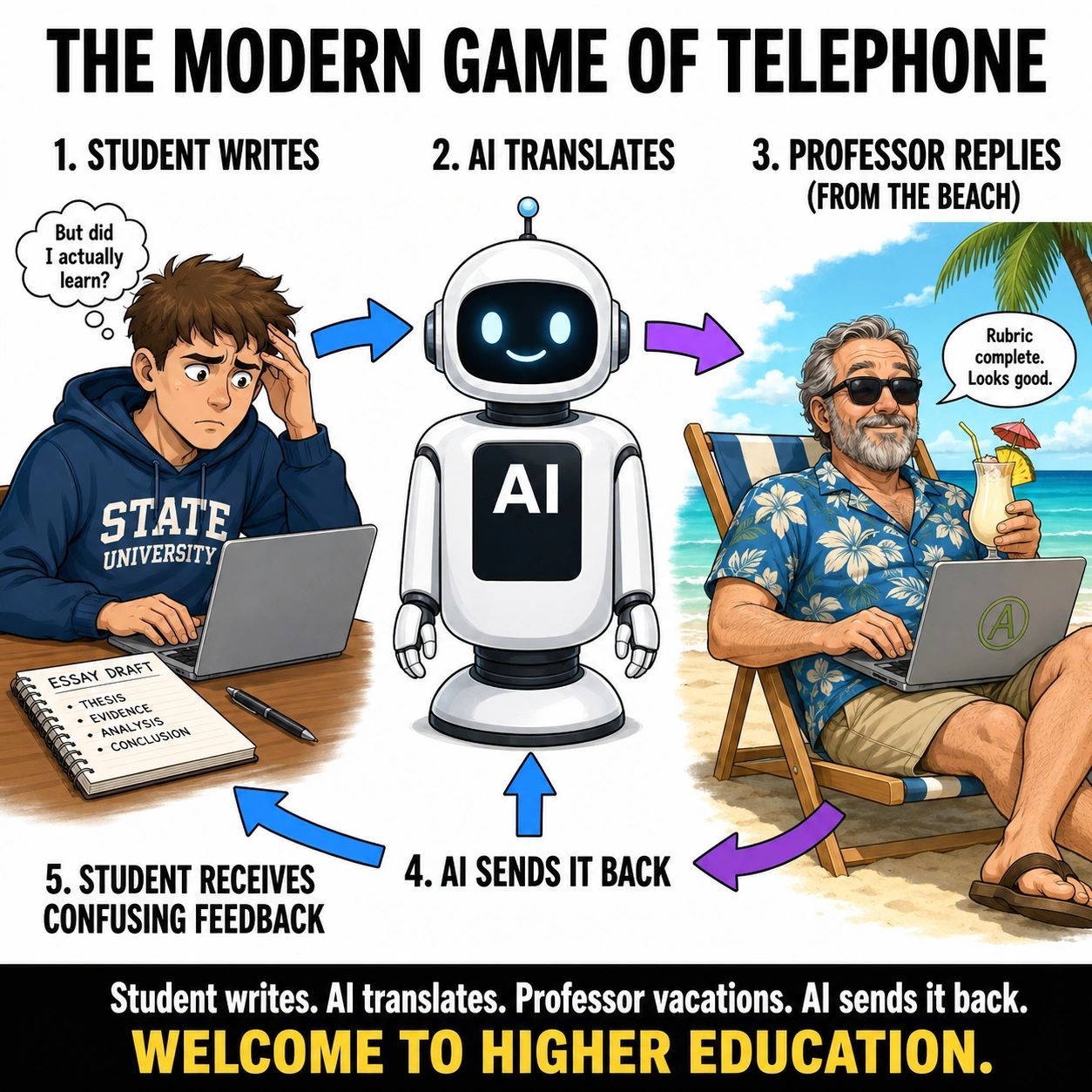
Modern Telephone: When AI Mediates Learning
In today's higher education system, a simple exchange between student and professor now goes through multiple layers of AI: summarizing, polishing, filtering, and "professionalizing." What used to be direct feedback has become a distorted game of telephone — where meaning gets lost, and genuine learning suffers. This meme perfectly captures the frustrating reality of AI-mediated education in 2026. Have you experienced this? Is AI helping or hurting real communication in academia?
|Distance Education, Education Policy, Education Technology, Healthcare, Learning and Development (L&D), Learning Management System, Meme, Privacy and Big Data
Cookies Are the Front Porch. The LMS Is Inside the Schoolhouse
A proposed class action over college website tracking cookies raises a much larger question: what happens inside the learning management system (LMS)? Unlike ordinary website cookies, an LMS can touch student submissions, grades, discussion posts, time-on-task data, and behavioral patterns. The front porch is visible — but what happens inside the schoolhouse is where the real privacy conversation needs to happen.
|Artificial Intelligence, Best Practices, Distance Education, Education Policy, Education Technology, Instructional Design, Instructional Media, Instructional Technology, Learning and Development (L&D), Learning Management System, Meme
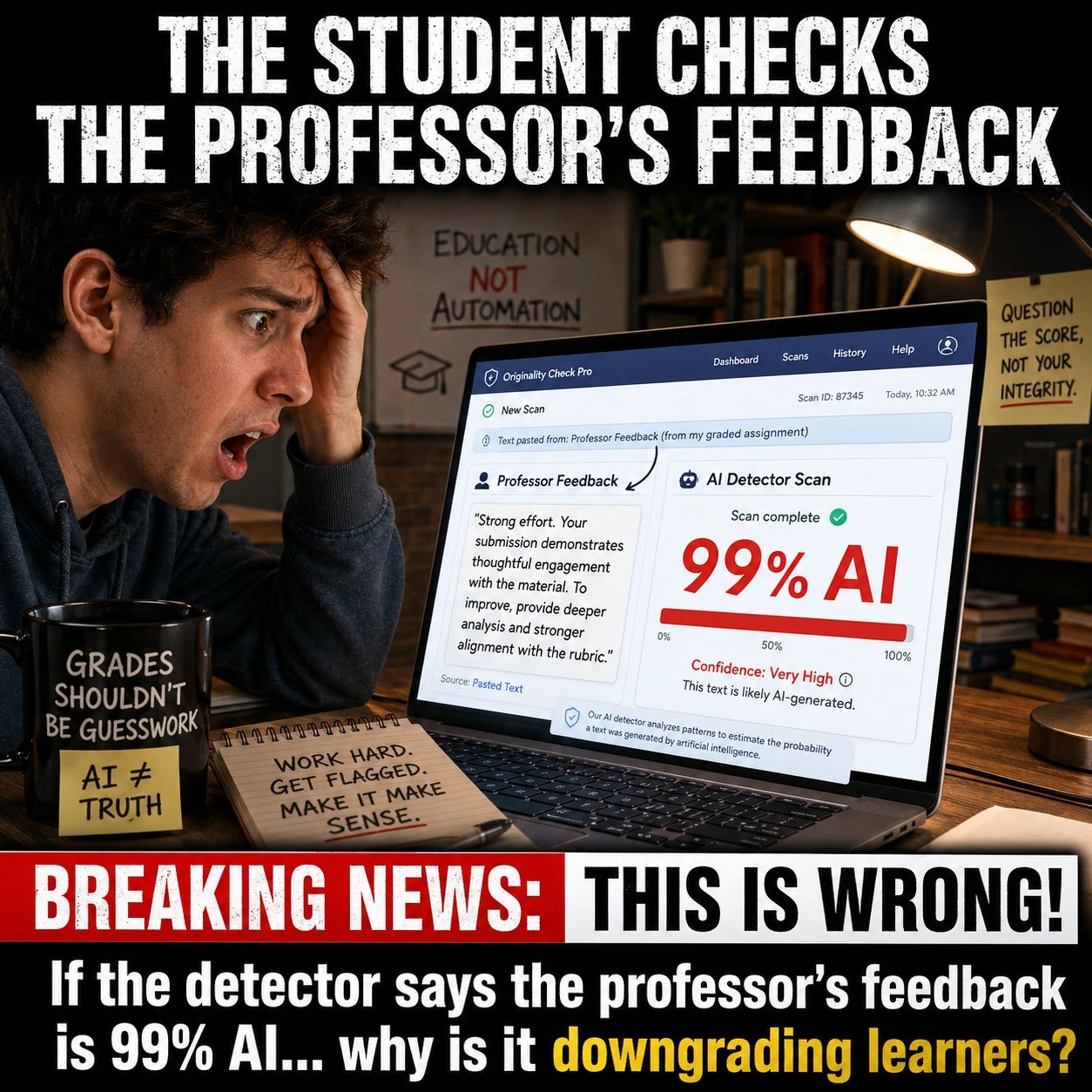
When the Professor's Feedback Gets Flagged 99% AI
A student copied the professor's grading feedback into an AI detector, and the result came back 99% AI. Whether the feedback was actually AI-generated, template-driven, or simply too generic for the detector to judge accurately, the result exposes a serious problem: unreliable AI detection should not be treated as academic truth. If these tools can flag instructor feedback, then students deserve transparency before grades, accusations, or downgrades are tied to flawed automated machine judgment. There is a process problem here — an academic process integrity problem. Yet tuition reimbursements are not being offered, apologies are not being made, and no one appears willing to acknowledge responsibility.
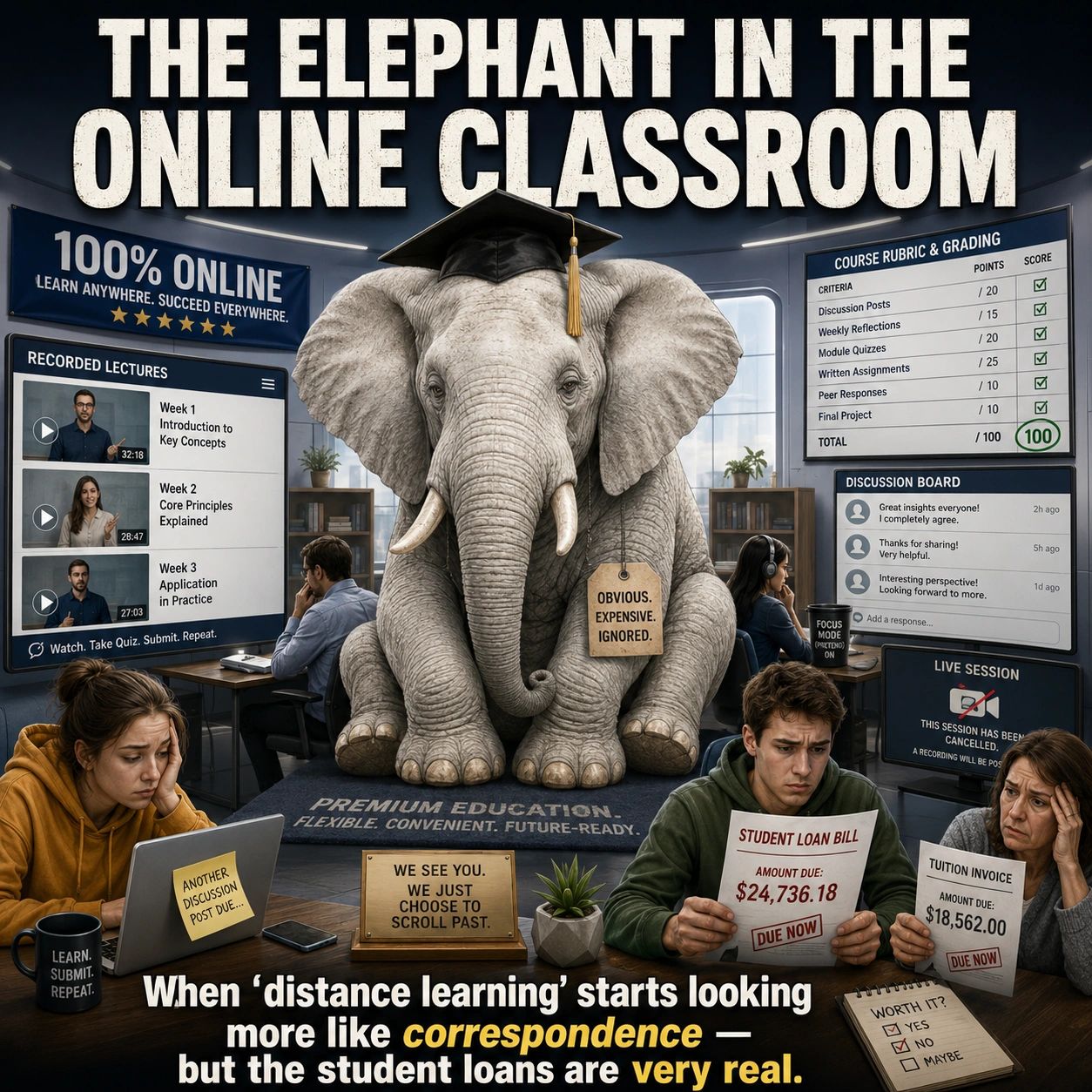
The uncomfortable truth about online higher education: We traded real classrooms for convenience and ended up with isolation, massive debt, and self-directed learning with extra steps. This meme hits too close to home for millions of students drowning in loans while their "packaged" courses feel more like 1990s correspondence school with better graphics. Not all online education is shallow — some courses are well-designed, instructor-led, and have live components and interactions. But when students pay premium tuition and take on loans for prerecorded modules and YouTube videos, rigid rubrics, canned discussion boards, and minimal teaching presence, the public and taxpayers deserve a clearer distinction between true distance learning and correspondence-style academic delivery.
|Artificial Intelligence, Augmented Reality, VR, Education Policy, Education Technology, Instructional Technology, Learning and Development (L&D), Learning Management System, Meme, Metaverse
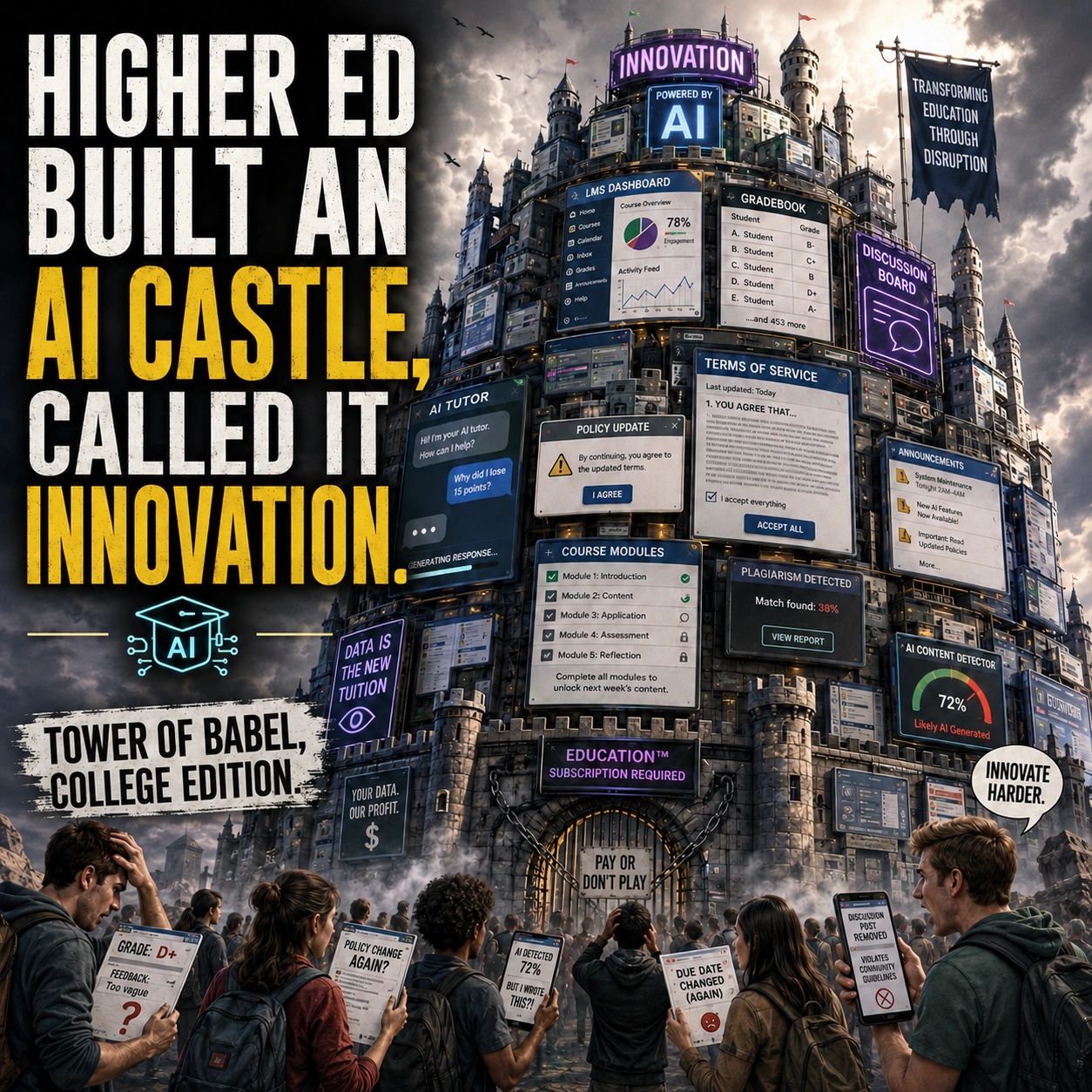
EdTech Built the Castle. Students Pay the Toll
Ed tech and higher education poured millions into AI platforms, dashboards, and "smart" tools — then called it revolutionary innovation. This meme exposes the chaotic reality: a modern Tower of Babel where complexity and automation have replaced actual learning. They called it "Innovation." We call it the Tower of Babel, College Edition. Are we building better education… or just another over-engineered disaster?
|Artificial Intelligence, Best Practices, Business Analysis, Distance Education, eLearning, Education Policy, Education Technology, Instructional Design, Instructional Technology, Learning and Development (L&D), Learning Management System, Meme
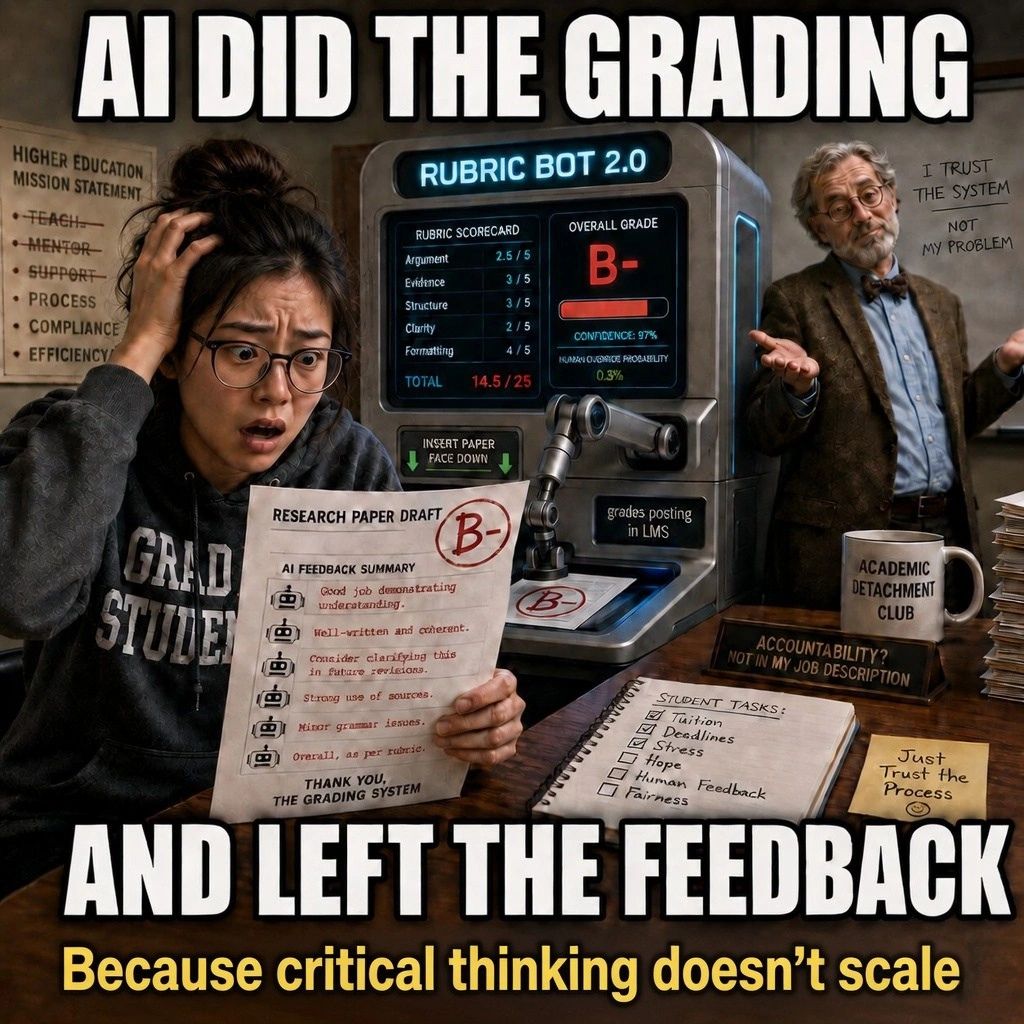
When AI Grades Papers: Critical Thinking Doesn't Scale
When Rubric Bot 2.0 starts grading papers and hands out B-minuses in seconds, faster than professors can read, one thing becomes clear: critical thinking doesn't scale. A hard-hitting look at what AI grading really means for students and higher education. What do you think — is this the future we want, or are we sacrificing real learning for efficiency?
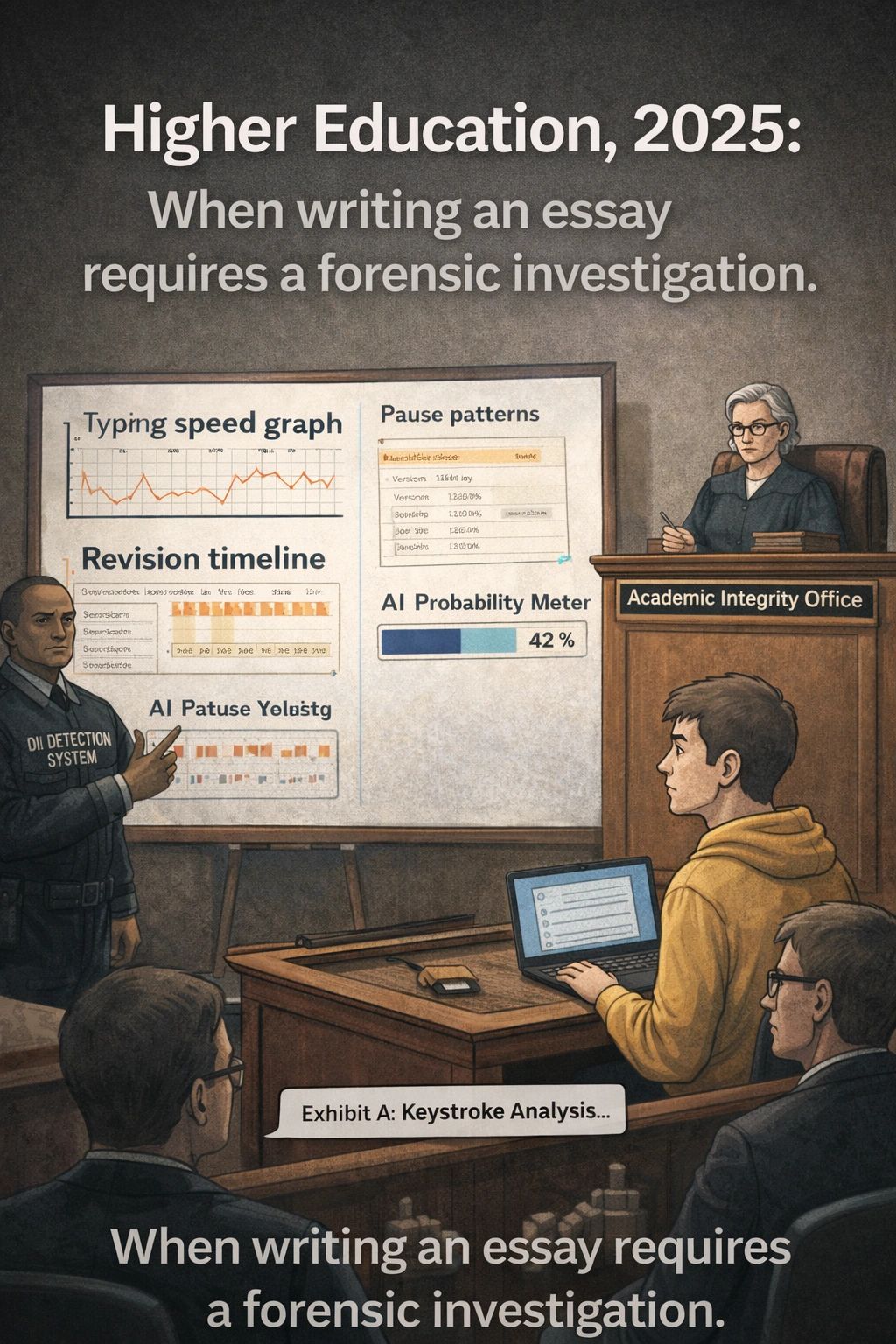
The Keystroke Hearing, Administrative Law Judge and Due Process
Curious how keystroke analysis, typing rhythm, revision tracking, and AI probability scoring are now used in academic integrity cases? In higher education, writing an essay was once a demonstration of thinking. Increasingly, it has become a forensic event. As artificial intelligence enters classrooms under the banner of "academic integrity," student writing is no longer evaluated solely on ideas, clarity, or argumentation, but on metadata: typing speed, pause patterns, revision timelines, probability scores, and behavioral signatures. Learning management systems (LMS) have the technology to record how long a document was open, how it was edited, whether text appeared gradually or all at once, and how closely a student's writing rhythm aligns with algorithmic expectations. What emerges is a new educational reality — one where essays are not just read, but investigated, and where students may find themselves defending not what they wrote, but how they wrote it. Where are the legal procedural safeguards? Where are the transparent student data exports?
|Artificial Intelligence, Education Policy, Education Technology, Instructional Design, Instructional Technology, Learning and Development (L&D)
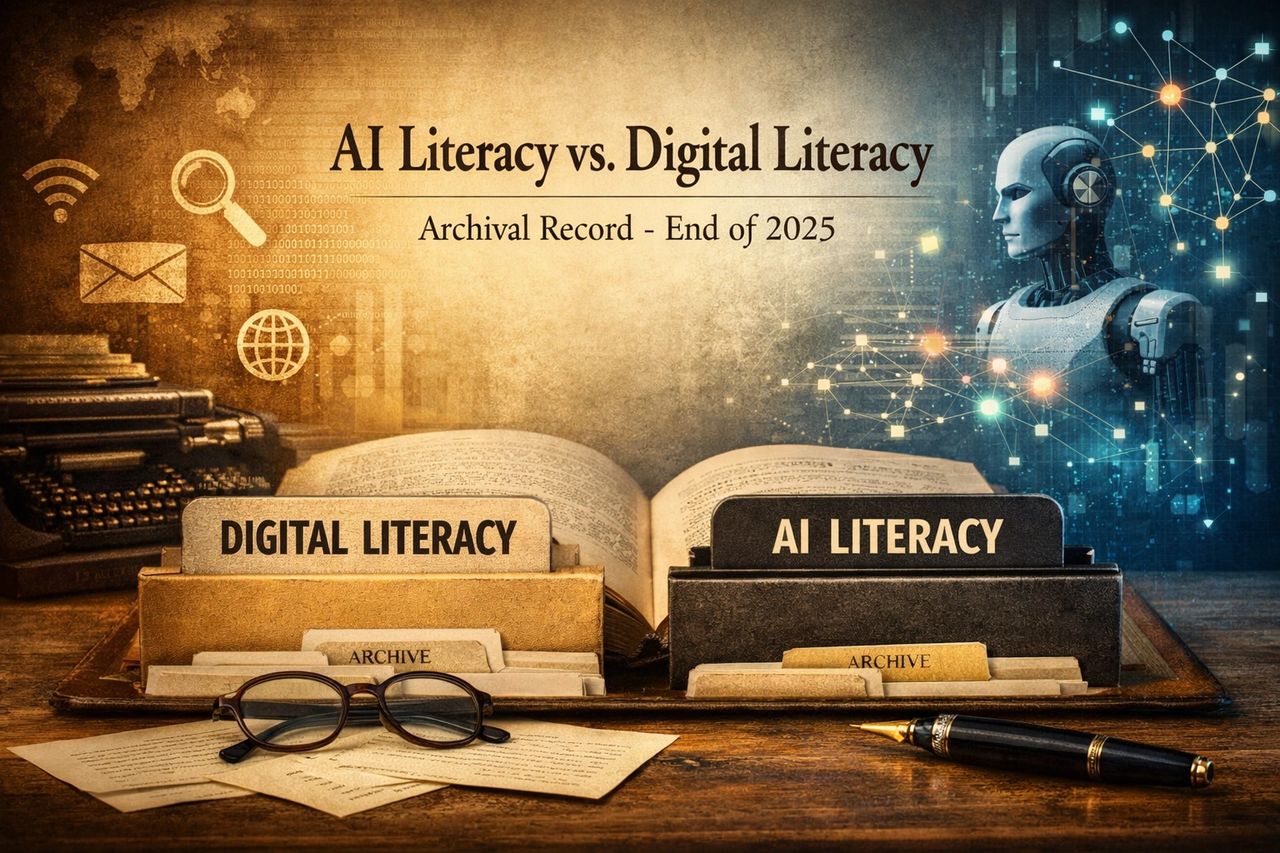
AI Literacy and Digital Literacy
An Archival Distinction at the Close of 2025. This entry is recorded at the close of 2025, a year in which generative artificial intelligence moved decisively from experimental use into formal educational, administrative, and policy environments. By the end of the year, "AI literacy" had entered the common language across schools, higher education, workforce programs, and public discourse. At the same time, "digital literacy" remained a familiar and widely adopted framework. The two terms were increasingly used together — and often interchangeably — despite referring to meaningfully different forms of engagement. Digital literacy centered on the human user operating within digital environments: navigating tools, evaluating information, communicating responsibly, and understanding the social and ethical dimensions of digital participation. AI literacy, by contrast, was still forming. By the end of 2025, AI literacy was less about operating tools and more about understanding what had been partially delegated to systems that generate, infer, predict, and adapt. The difference between the two literacies was not merely semantic. It reflected a shift in where cognition, decision-making, and responsibility were located. By the end of 2025, this fault line had not yet been formally reconciled.
|Artificial Intelligence, Best Practices, Education Policy, Instructional Design, Learning and Development (L&D), Meme, Privacy and Big Data
In the ICU, patients aren't impressed by AI or DEI education
In the high-stakes world of medicine, patients and families aren't impressed by the latest diversity, equity, and inclusion workshops or trendy pedagogical theories. They care about one thing: Can you perform when it matters most? This image captures the disconnect perfectly — woke medical staff discussing "Equity Frameworks," "Constructivism," and "Cultural Humility" while an elderly patient lies there, hands clasped in desperate prayer, fighting for her next breath. When seconds count, patients don't need reflective practice exercises. They need skilled professionals who can execute action and logic under pressure. In the era of digital health transformation — with AI diagnostics, remote monitoring, and data-driven care — patients still don't care about equity pedagogy or ideological frameworks; they're praying the medical profession can use critical thinking and save their lives. Competence is the only equity that actually matters in the ICU.
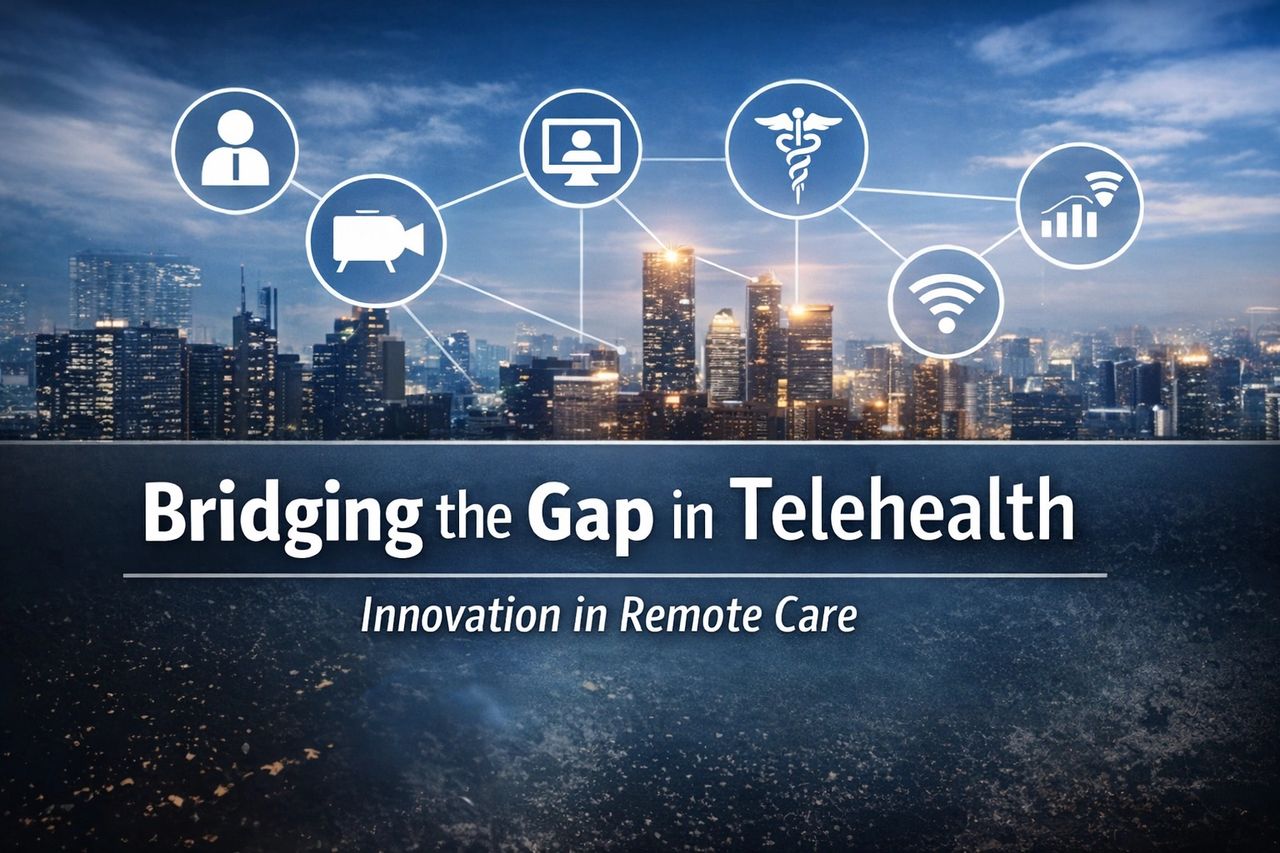
There was a moment during the rapid expansion of telehealth when it felt like healthcare had finally caught up to the digital age. Platforms were deployed, virtual visits surged, and systems congratulated themselves on adaptability. But something quieter was happening beneath the surface. Clinicians were logging in — fully prepared. Patients were being seen — but not always understood. And training, the one system meant to hold it all together, was largely left behind. Telehealth did not fail. Its training did. Much of telehealth training today still assumes that proximity and presence are interchangeable. But remote care changes everything. Eye contact becomes interpretation. Silence becomes uncertainty. Delays become risk. Telehealth is not a tool. It is an environment. Instructional designers who understand distance learning, simulation, and systems thinking are positioned to close that gap — not by adding more content, but by building better environments for learning.
|Artificial Intelligence, Best Practices, Business Analysis, Education Policy, Education Technology, Learning and Development (L&D), Learning Management System
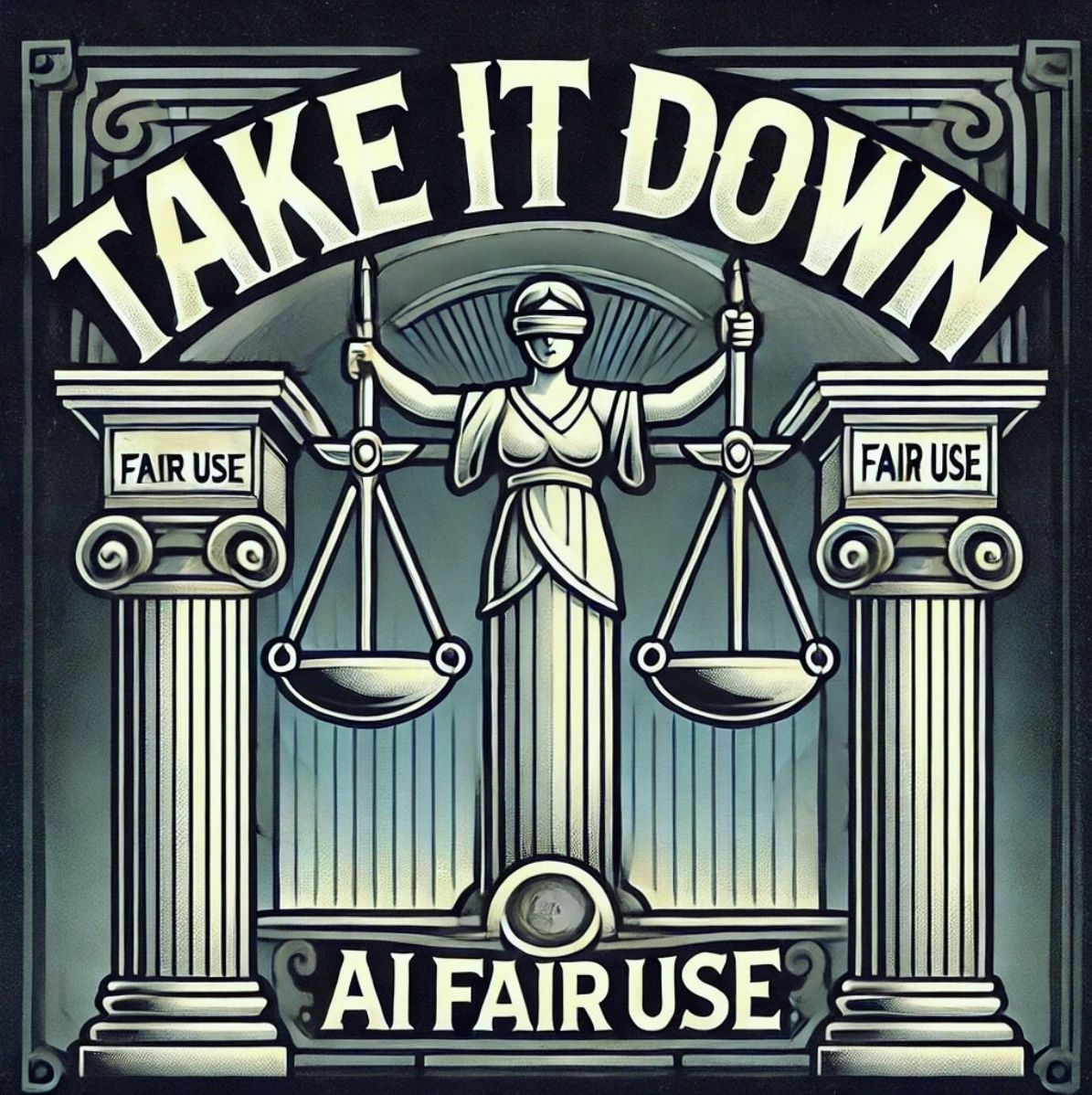
The Take It Down Act's Impact on AI Fair Use in Education Tech
The recently introduced Take It Down Act (S.146 in the Senate and H.R. 633 in the House) promises to crack down on non-consensual intimate imagery online. This legislation has big implications not only for personal privacy but also for how AI fair use might evolve, especially in application to education technology. In a climate of growing concern about Big Tech overreach, it's worth examining how this act balances technological innovation, user rights, and corporate responsibility. The Act's focus on protecting individuals (particularly minors) from AI-altered exploitation raises critical questions about education application in free expression, academic fair use, and the accountability of tech giants in the realm of AI-driven education tools. While the Take It Down Act is aimed squarely at protecting individuals from intimate privacy violations, it may very well be just the first step in a new wave of AI-related policy — serving as a template for future legislation on AI fair use, content ownership, and digital rights.
|Artificial Intelligence, Best Practices, Education Policy, Education Technology, Instructional Design, Learning and Development (L&D)
Antifragile Schools at Home: Why Parents Need an AI Strategy
Public education has spent the past decade building entire structures that advocate for themselves. Agencies defend their policies. Districts frame their initiatives as progress. Unions mobilize talking points. NGOs orbit the system and reinforce its internal language. Everyone has a voice except the one group who experiences the greatest consequences of these decisions: parents. Even in states with healthy school-choice ecosystems, most families still lack the clarity needed to make informed decisions. Many do not actually know what a charter school is. Marketing language — "tech-forward," "whole child," "innovative," "community school" — is often interpreted as instructional difference, when in reality it may simply describe a set of equipment purchases or a cultural ambiance. One of the most misunderstood narratives in K–12 right now is the idea that AI is here to replace someone or something. Districts that understand AI are using it to reduce the administrative strain that burns teachers out, create tighter feedback loops for students, and improve communication with multilingual families. Artificial intelligence gives parents a way to translate school communication into plain language, review curriculum decisions with clarity, and personalize learning in ways that were impossible even five years ago. Antifragility is not a school reform. It is a family strategy. And it starts at home.
|Artificial Intelligence, Business Analysis, Education Policy
The Death of the Dissertation Editor: A Tragicomedy in Higher Ed
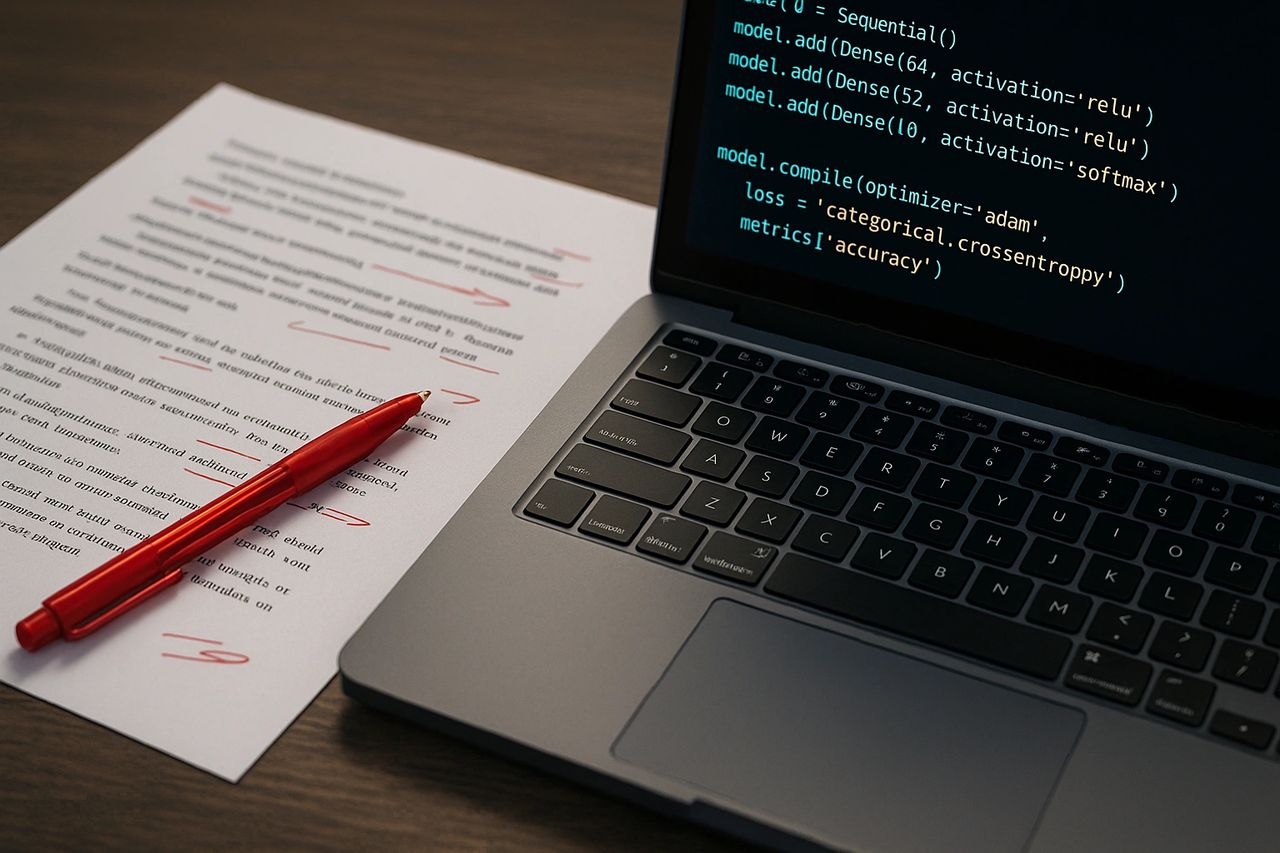
You may not have noticed it yet, but a once-reliable species in the academic ecosystem has quietly gone extinct. The dissertation editor — that over-caffeinated savior of comma splices and citation formats — is gone. Her red pen lies cold on the desk, her APA 7 Publication Manual forever bookmarked near the section on "Common Errors in Subordinating Conjunctions." No memorial service was held. No academic journal published an obituary. Then, AI arrived — quietly, efficiently, unapologetically. ChatGPT, Grammarly, Wordtune, and a dozen other tools began doing in seconds what used to take human editors a week. The students caught on first. The administrators pretended not to notice. Universities could have adapted. They could have embraced AI editing tools as companions to human review — teaching scholars how to use automation ethically. But that would have meant admitting that much of academic writing is performance, not scholarship. Instead, they doubled down. Memos went out declaring AI use "forbidden." Meanwhile, the same institutions happily used Turnitin's AI detector to police those tools. The dissertation editor didn't die because she wasn't valuable. She died because her value was replicated faster and cheaper. Her death isn't tragic — it's instructive. It proves that automation doesn't destroy scholarship; it destroys inefficiency. Don't ban the future — edit it.
|Artificial Intelligence, Augmented Reality, VR, Instructional Design, Learning and Development (L&D)
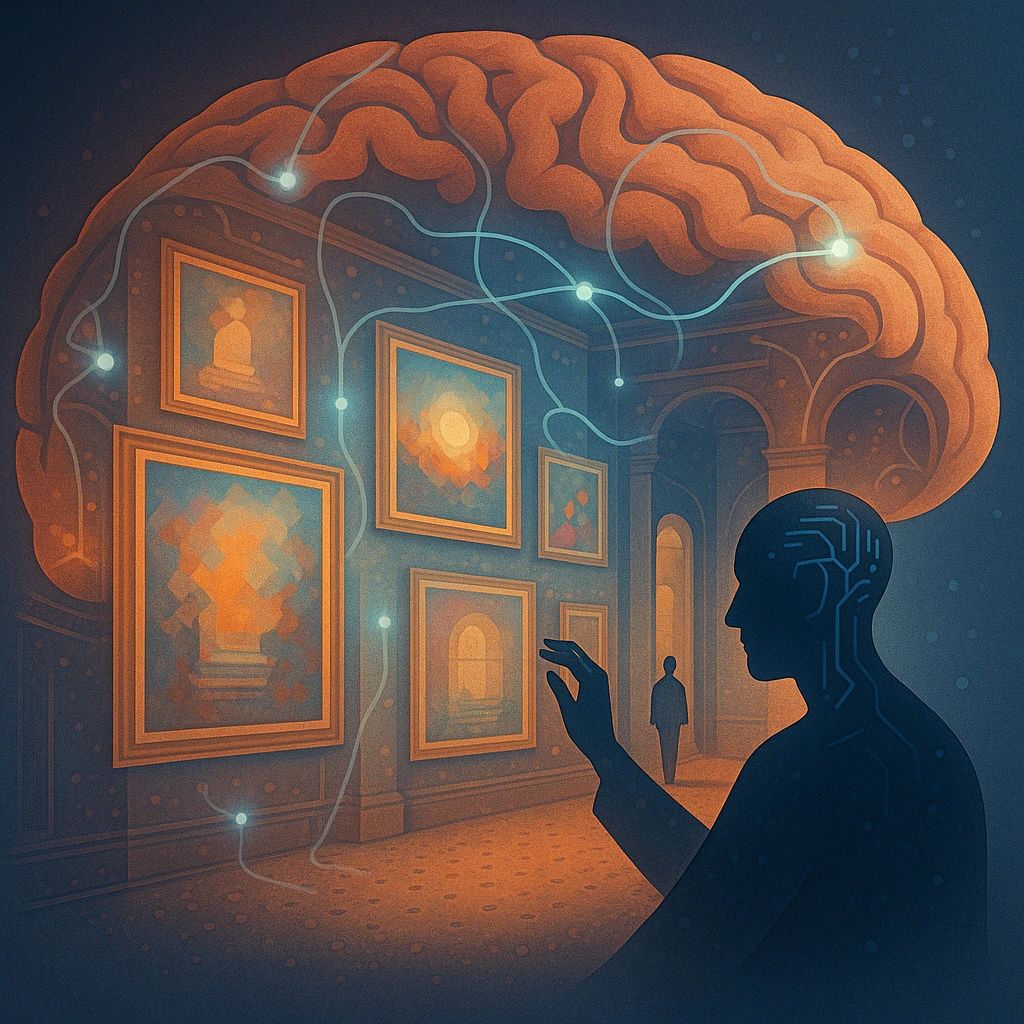
The Algorithmic Museum: When the Gallery Moves Into the Mind
I recently visited the Barnes Foundation in downtown Philadelphia. It's one of those places that quietly rearranges your perception — not just of art, but of control. There are no descriptive plaques on the walls. No curatorial explanations to guide you. Dr. Albert C. Barnes himself arranged every piece — every Renoir beside an African ironwork, every mirror placed to reflect the color field of another painting — and he instructed that nothing ever be moved. What feels spontaneous is, in truth, completely structured. That realization followed me home. Because the Barnes isn't just a museum — it's a metaphor for the algorithmic world we live in now. On social media, in AI-driven learning, even in virtual meetings, we move through environments that look open but are curated by design. The algorithm is our new Dr. Barnes — deciding what we see, when we see it, and how long we linger. For years, educators talked about digital literacy — the ability to navigate tools and information online. But that definition is outdated. The new literacy is cognitive literacy: understanding how digital systems frame, filter, and shape thought. Mixed reality takes this one step deeper. Instead of seeing the museum, we become it. Digital layers project onto physical space — annotations, holograms, guided overlays — and our brains fuse them into lived memory. The museum is no longer confined to a street in Philadelphia; it can be reconstructed through data, interface, memory, and imagination.
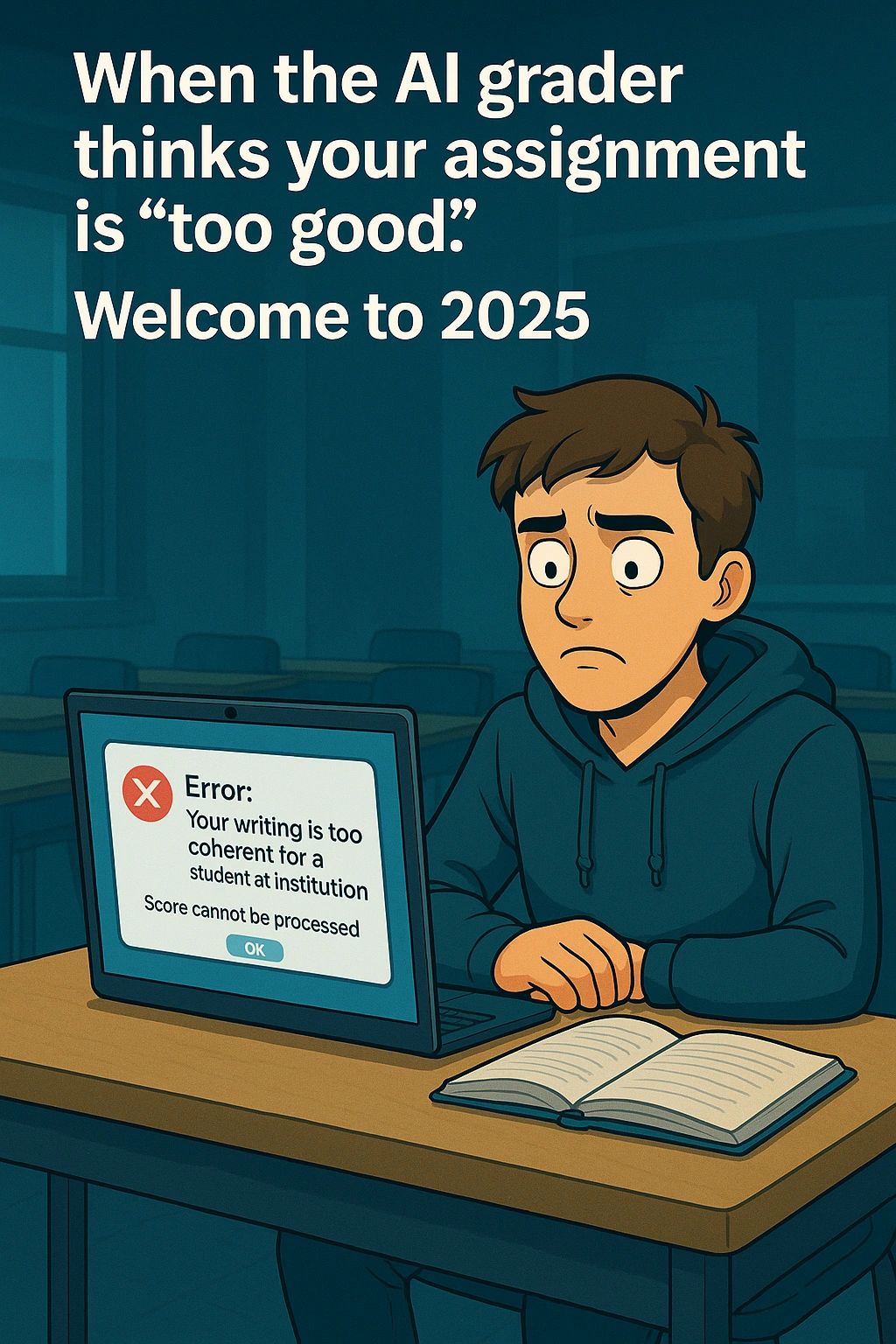
When AI Grading Gets It Wrong: The "Too Good" Assignment Meme
This meme captures a growing reality in education: automated instructional grading systems and AI-detection tools sometimes misinterpret genuine student work. As classrooms become increasingly algorithmic, students and instructors are asking the same question: what happens when your writing is too good for the system to believe? This meme highlights the tension between human intelligence and machine evaluation in a playful but thought-provoking way.
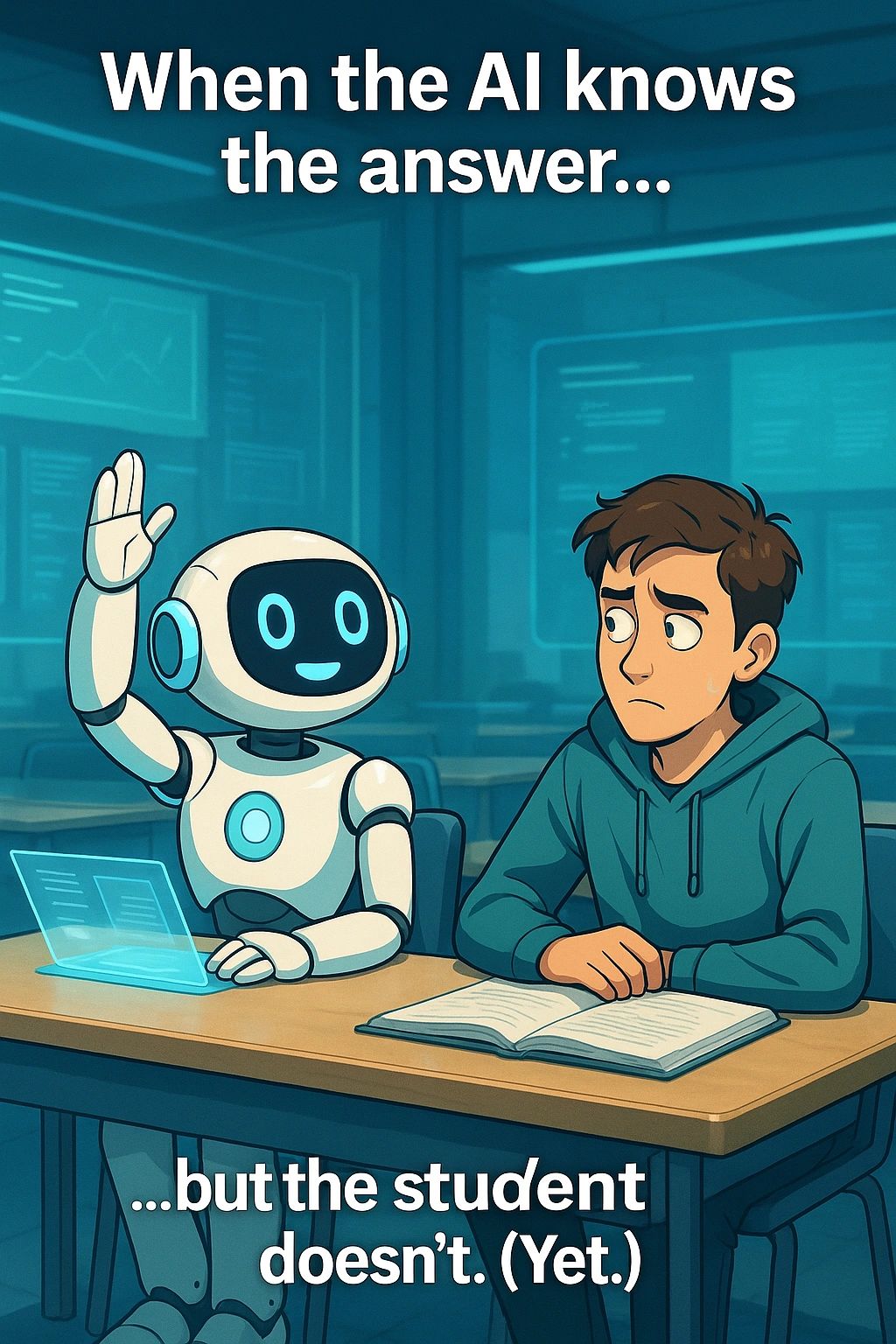
AI Tutors and Human Students: the New Digital Learning Ecosystem
A humorous look at the future of learning, where AI tutors seem more confident than human students. This meme captures the evolving dynamic inside modern digital classrooms. Learn the digital skills behind the systems shaping education, work, and the AI-powered future @Smart City School
|Business Analysis, Education Policy, Education Technology, Instructional Media
The Hidden Cost of Digital Procurement: Book Bots and Distortion
In the fast-evolving world of educational technology, we've grown accustomed to disruption. We welcome innovation — adaptive platforms, AI tutors, digital textbooks — and the promise of cost-effective, personalized learning. But lurking beneath this transformation is a far less visible, far more dangerous form of disruption: automated, dynamic price manipulation driven by book bots. The same automation that powers efficiency in some sectors is quietly undermining trust in others. Book bots operate across multiple online marketplaces — Amazon, eBay, AbeBooks, Alibris, and others — using repricing algorithms, ghost listings, and artificial scarcity to inflate prices on educational materials. A used nursing certification guide that previously sold for $40 might suddenly appear across multiple platforms at $300 or more, despite no corresponding increase in demand. Educational institutions are increasingly shifting procurement online for efficiency, but this makes them more vulnerable to pricing manipulation than ever before. The solution isn't necessarily to retreat from digital markets. Rather, it's to become far more sophisticated — and far more skeptical — about the invisible forces now shaping them.
|Augmented Reality, VR, Best Practices, Business Analysis, Distance Education, Education Policy, Education Technology, eLearning, Instructional Technology, Learning and Development (L&D), Metaverse
The Future of Field Trips: How Wearable VR Tech Enhances Learning
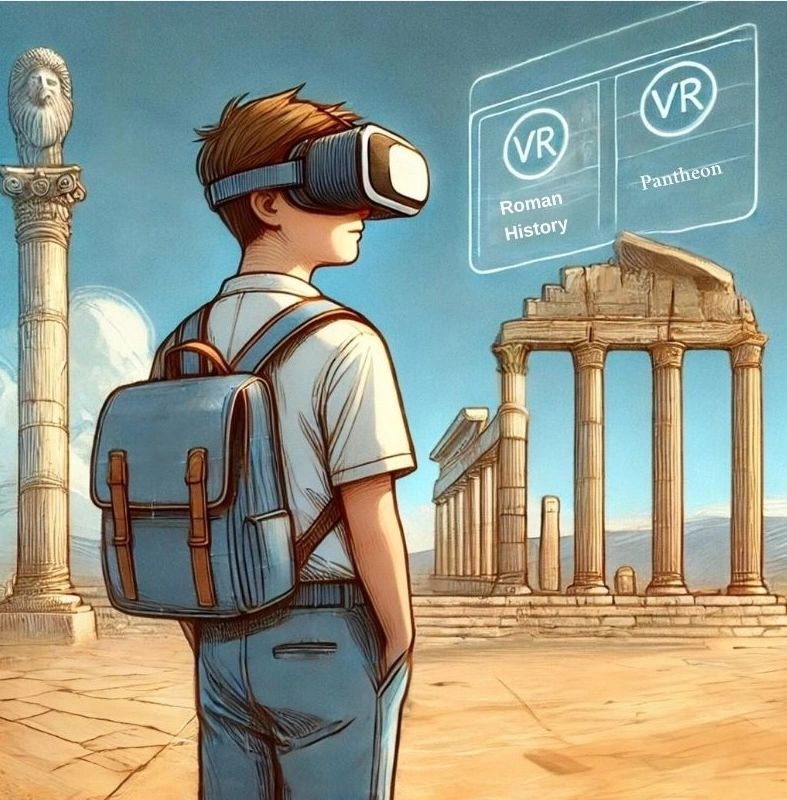
As students across the nation return to the classroom this fall, the adventure of learning continues to evolve, offering new horizons that extend beyond the confines of classroom walls. The buzz isn't just about new teachers or coursework; it's about transforming the concept of educational trips with the latest trend in educational technology: virtual reality (VR) field trips. The introduction of VR into educational settings isn't just a leap into the future; it's a revitalization of the way we perceive learning environments through telepresence. Imagine transporting a class from their desks straight to the sunlit ruins of Roman pantheons or the intricate Gothic architecture of Notre Dame. For students, VR field trips can be a gateway to enhanced interactive learning. They offer immersive experiences that are not limited by geographical or financial constraints. In a world where learning engagement and motivation can often wane with conventional teaching methods, VR stands as a beacon of innovation, rekindling the excitement of discovery and exploration. As we stand on the brink of this educational revolution, the question isn't whether VR field trips will become a staple of learning, but how swiftly we can embrace its potential to transform the traditional educational landscape.
|Education Policy, Education Technology, eLearning, Instructional Design, Instructional Media, Instructional Technology, Learning and Development (L&D)
Integrating Podcasting into High Schools: A Necessity
In today's digital age, where big corporations often dominate the media landscape, the unique and organic voices of individuals and smaller communities are increasingly at risk of being drowned out. This is not necessarily due to deliberate censorship by major platforms like Google and Meta, but rather a side effect of their advertising-driven structures. Why should podcasting be integrated into K-12 high school education? The answer lies in the empowerment and democratization of media. By introducing students to podcasting, we equip them with the ability to navigate and possibly counteract the complexities of media saturation in a world dominated by major advertising revenues. Integrating podcasting into high school marketing curriculums is not just an innovative approach but a necessary one in today's digital-first world. Podcasting not only teaches students about the technicalities of recording and editing audio but also enhances their storytelling, research, and critical thinking skills. If public K-12 high school education systems fail to embrace these tools, many organic voices — those of our students — risk being forgotten or overshadowed. Let's equip our students not just to succeed in the world as it is, but to reshape it for the better.
The Impact of AR Face Filters on Live Video Sessions
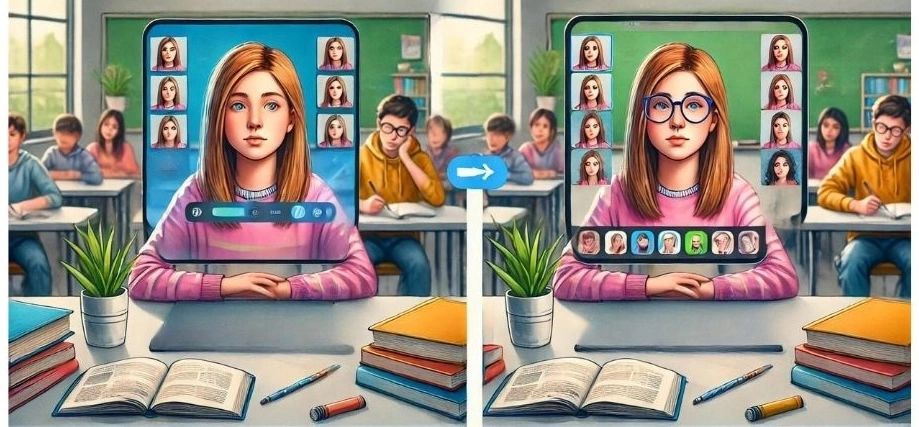
In the rapidly evolving landscape of digital education, Augmented Reality (AR) face filters are emerging as a game-changing tool. While many associate these technologies with social media fun, their integration into live learning, video environments presents an opportunity to revolutionize educational engagement and participation. AR face filters, once the domain of social media influencers, have found a profound new purpose in education. These digital effects, capable of altering how one is perceived in real-time, offer more than just aesthetic alterations — they provide privacy and a psychological safety net for students who might feel apprehensive about participating in recorded video-based classes. The anonymity and playful elements introduced by AR can reduce social anxiety, making digital classrooms more accessible to all students. Research indicates that students who use AR filters are more likely to participate in discussions, ask questions, and express their opinions without fear of judgment based on their physical appearance. As we look to the future, the role of AR in education is set to expand. Educators, technologists, school administrators, and policy makers must collaborate to ensure that AR tools are used ethically and effectively to foster inclusive and engaging educational environments.
|Assistive Technology, Best Practices, Education Policy, Education Technology, eLearning, Instructional Design, Instructional Media, Instructional Technology, Learning and Development (L&D), Special education
Elevating K-12 Learning with Multi-sensory Touchscreen Laptops
Modernizing Education with Technology. In the pursuit of integrating technology within educational environments, touchscreen laptops stand as transformative tools for K-12 education. These devices enrich the educational landscape by providing a multisensory experience that supports a broad spectrum of learning styles. Touchscreen laptops are not just an upgrade from traditional computers; they are a gateway to a more interactive and engaging learning process that incorporates touch, sight, and sound. They provide essential accessibility features that accommodate students with diverse needs — features like text-to-speech, screen magnification, and kinesthetic learning support not just those in special education, but all learners.
Education User Experience (UX): AR Face Filters for Video Formats
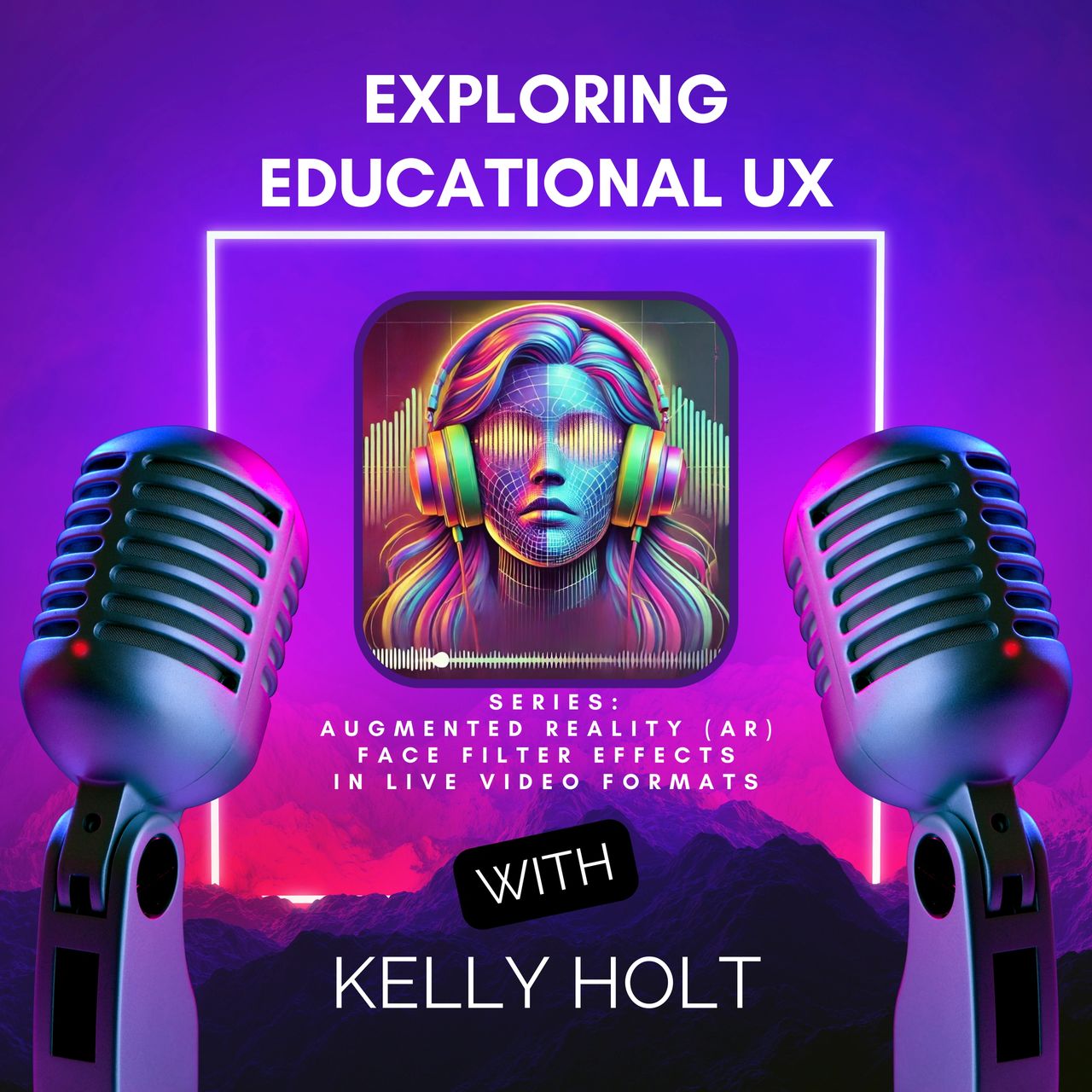
In today's digital age, the fusion of technology and education has opened a new frontier for interactive learning. Augmented Reality (AR) is at the forefront of this revolution, bringing a dynamic shift in how educational content is delivered and experienced. Our latest Exploring Education UX podcast series, "AR Face Filter Effects for Live Video Format," dives deep into the implications of AR technology in educational settings, focusing on AR face filters and real-time camera filters — an area that's proving to be a game-changer for student engagement and creative expression. AR face filters offer more than just visual enhancement; they empower students to control how they present themselves during live video classes, addressing common anxieties associated with on-camera appearances and significantly boosting confidence, participation, and creativity.
Assistive Technology vs. Instructional Technology Explained
Assistive technology (AT) and instructional technology are two different types of technologies that serve different purposes in the context of education and learning. Assistive technology refers to any technology or device designed to assist individuals with disabilities in performing tasks that might otherwise be difficult or impossible — examples include hearing aids, screen readers, wheelchair ramps, and accessibility supports. Instructional technology refers to any technology used to support and enhance the teaching and learning process — examples include interactive whiteboards, learning management systems, and educational software. While both have the potential to support learning outcomes, assistive technology is primarily focused on addressing individual needs and overcoming barriers, while instructional technology is focused on improving the comprehensive teaching and learning experience for all students.
|Best Practices, Distance Education, Education Policy, Education Technology, eLearning, Instructional Technology, IoT, Learning and Development (L&D), Metaverse, Mobile Learning
Unlocking Global Learning: How OER and Blockchain Pave the way
In the burgeoning landscape of global education, the revolution of Open Educational Resources (OER) is reshaping how knowledge is disseminated and consumed. Envision a future where education isn't just universally accessible but also verifiably credentialed through blockchain technology. OER and blockchain together represent a powerful convergence — one that could democratize learning at a global scale while ensuring the integrity and portability of credentials across borders and institutions.
|Artificial Intelligence, Augmented Reality, VR, Best Practices, Education Policy, Education Technology, eLearning, Healthcare, Instructional Design, Instructional Technology, IoT, Learning and Development (L&D), Learning Management System, Metaverse, Mobile Learning
A Physical Education Tech Class Is As Essential As Sex Education
Physical Education is standing on the precipice of groundbreaking change. And the catalysts? Wearables and biohacking. I propose that schools introduce a PE Tech class in high school for half a semester — the equivalent of a sex education course: short, intensive, and undeniably essential. The goal is not to make experts out of our teens but to give them the rudimentary skills and knowledge to make informed decisions about their health. The course would cover wearables like Fitbits and Apple Watches, biohacking basics, and health apps. Just as sex education arms young people with vital knowledge for a specific aspect of adult life, a PE Tech class would equip them with essential skills to navigate their physical well-being in our increasingly digital world. The physical well-being of our students is too important to ignore — it's time to make this vision a reality.
|Best Practices, Distance Education, Education Policy, Education Technology, eLearning, Instructional Design, Instructional Technology, Learning and Development (L&D)
Wearables and the Bio-Technological Age: A New Era in Education?
In today's fast-paced world, where technology is rapidly evolving, the line between man and machine is becoming increasingly blurred. Wearables and the bio-technological age are not just reshaping our daily lives but also the landscape of education. From smart watches that monitor our vitals to glasses that superimpose digital data onto our environment, wearables are becoming more than just accessories. Beyond wearables, the bio-technological age promises even more transformative changes — bio-implants enhancing cognitive abilities or chips interfacing directly with our brains. It's essential to address equivalency theory: learning experiences should be equivalent in effectiveness for all students, not just those with access to the latest technology. The confluence of wearables and the bio-technological age offers both thrilling prospects and significant challenges for education. Our focus should be on harnessing technology's power to provide equivalent opportunities for all learners.
|Best Practices, Business Analysis, Distance Education, Education Policy, Education Technology, Human Resources, Instructional Design, Instructional Media, Instructional Technology, Learning and Development (L&D)
New Learning Systems: The Role of an Expert Technologist
In the fast-paced digital era, where technology and education intersect, the expertise of an instructional technologist has emerged as an essential resource asset for institutions and organizations seeking to harness the power of innovation in their learning environments. Instructional technologists are akin to architects designing the blueprint for seamless learning experiences that intertwine technology with effective pedagogy. Their expertise extends beyond a mere fascination with devices; it encompasses a profound understanding of both technological intricacies and educational principles. Organizations housing a plethora of learning assets face a unique challenge during system upgrades and technological transitions — here is where instructional technologists shine. While K-12 teachers and college professors excel in classroom instruction, the intricate task of assessing and integrating learning assets during technological transitions demands the precision and specialized training that instructional technologists bring to the table.
|Artificial Intelligence, Best Practices, eLearning, Instructional Design, Instructional Technology, Learning and Development (L&D), Learning Management System, Special education
The Power of Human Touch in Automated Grading Systems
Today we address the fascinating world of automated grading in the subject of English literature. Literature is a complex and deeply interpretive realm, making it a challenge for technology to capture the nuances and creativity inherent in students' responses. Automated grading systems have been a boon for educators worldwide, revolutionizing the way we manage and evaluate student assessments. However, a rigid algorithm may not be capable of grasping the intricate layers of meaning students infuse into their responses. By designing short answer fields in automated grading systems, educators can strike a balance between efficiency and preserving the richness of individual interpretations. It's important to combine the efficiency of technology with the human touch — instructors must be responsible for feedback and grading. The human touch is irreplaceable, and it is the synergy between automation and individuality that will truly shape the future of education.
|Artificial Intelligence, Augmented Reality, VR, Best Practices, Business Analysis, Education Policy, eLearning, Instructional Design, Instructional Technology, IoT, Learning and Development (L&D), Learning Management System, Metaverse
The Future? Cyborg Intelligent Teachers and Home-based Learning?
Welcome to a thrilling vision of the future where education merges with cutting-edge technology to transform the way we learn. We explore a fascinating concept: the integration of cyborg intelligent teachers — robots with advanced AI capabilities — into our homes. Picture a world where every household has a robot instructor seamlessly interacting with online courses. By combining the expertise of human educators with the analytical power of artificial intelligence, cyborg intelligent teachers promise a truly revolutionary learning experience. Based on current trends, by the mid-2030s we may see a more substantial diffusion of cyborg intelligent teachers in homes. However, ethical considerations from education agency cost cutting strategies, privacy safeguards that monitor the monetization of student data to third parties, and the role of the human voice in education are critical areas that require careful attention as we navigate this uncharted territory.
|Best Practices, Instructional Design, Instructional Media, Instructional Technology, Learning and Development (L&D)
Amplify Instructional Design with Social Media Video Platforms
In today's digital age, it's crucial to leverage the power of social media video platforms to engage your audience and enhance your instructional content. Whether you're creating educational videos, training materials, or e-learning modules, embedding your content on platforms like YouTube, Instagram, or TikTok can help you reach a wider audience and make a lasting impact. Know your target audience, craft engaging content, optimize your videos for SEO, utilize video descriptions, engage with your audience, and leverage analytics. As an instructional designer, social media video platforms provide you with an incredible opportunity to reach and engage learners on a massive scale. Stay open to new trends and emerging platforms, and adapt strategies accordingly — embrace the power of social media and let it propel your instructional design journey to new heights.
|Best Practices, Business Analysis, Instructional Design, Instructional Media, Learning and Development (L&D), Learning Management System
Collaboration Tips: Instructional Designers and Content Creators
In today's digital age, the synergy between instructional designers and content creators is vital for the development of captivating and effective learning materials. Collaborating with video or graphic design artists can elevate the quality of your learning content, making it more engaging, visually appealing, and impactful. Define clear objectives and learning outcomes, foster open communication channels, collaborate on storyboarding and scripting, embrace visual and interactive design, seek consistency in branding and user experience, and test and iterate. The ultimate goal is to create compelling and memorable learning experiences that empower learners and drive their success. Remember, instructional designers are always evolving — just like the digital landscape.
K12 Virtual Reality Instructional Design and Assessment
What implications could virtual reality (VR) gaming and paid boosted leveling have on K12 VR instructional design and assessment? After watching The Peripheral on Amazon Prime, one cannot help but ask hypothetically: what if level boosting happened in K12 VR education where student grade levels became mixed, blurred, and students used avatars? Could a tenth grader pay someone to boost them to the next grade level? The delivery of education in the Metaverse will take some time to work out the problems. One opinion by Khan World School suggests a media creation mechanism to cut back on cheating where students record their face and screen as they take an assessment and explain their reasoning out loud. The area of assessment in K12 VR instructional design will be an area to watch as stakeholders will want to know best practices for assessment and program fidelity.